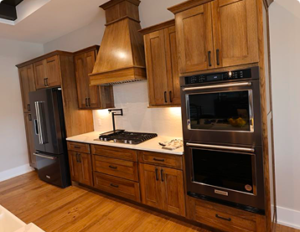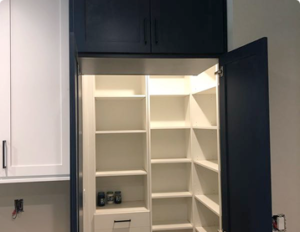

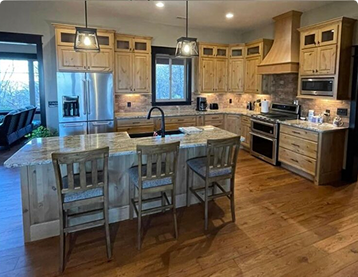
A kitchen remodel is one of the biggest investments you’ll make in your home. It’s also one of the most personal. You’ll cook thousands of meals there, host holidays, help kids with homework at the island, and pour your morning coffee in the same spot every day for years.
Getting the design right means thinking beyond what looks good in a magazine. It means building a kitchen that fits the way your household works.
Here are five things to get right before anything gets built.
1. Start With How You Cook, Not How You Want It to Look
Every kitchen design starts with the same temptation: pick a style from Pinterest and work backward. The problem is that a kitchen built for photos isn’t always a kitchen built for Tuesday night dinner with three things going at once.
Before choosing finishes or cabinet door styles, answer these questions honestly:
How many people are usually in the kitchen at the same time? If two people cook together regularly, you need enough counter space and clearance that you’re not bumping elbows. If it’s usually one person, you can prioritize a tighter, more efficient layout.
Do you cook from scratch most nights, or is your kitchen more of a reheating and assembly station? A serious home cook needs different things than someone who orders takeout three nights a week. Deep drawers for pots, a dedicated prep zone, pantry storage for bulk ingredients. These decisions flow from how you use the space.
Do you entertain? If friends and family gather in your kitchen during parties, an open layout with island seating makes sense. If you prefer guests in the dining room, you can close off the kitchen and maximize working space instead.
Start with function. Style follows.
2. Get the Layout Right Before Choosing a Single Finish
The layout is the bones of your kitchen, and no amount of beautiful countertops or hardware will fix a layout that doesn’t work.
The classic work triangle (stove, sink, refrigerator) is a decent starting point, but modern kitchens have evolved past a simple triangle. Today’s kitchens have multiple work zones:
The prep zone is where you chop, measure, and assemble. It needs counter space, good lighting, and easy access to knives, cutting boards, and mixing bowls.
The cooking zone centers on your range or cooktop. Pots, pans, oils, and spices should be within arm’s reach. A landing spot next to the stove for hot pans is non-negotiable.
For cleanup, the sink and dishwasher area is central. Plates, glasses, and everyday dishes should store between the dishwasher and the table to cut down on steps when unloading.
The storage zone is your pantry, whether that’s a walk-in, a pull-out cabinet, or a set of dedicated shelves. Keeping dry goods, small appliances, and bulk items organized and accessible makes the whole kitchen feel calmer.
Map these zones on paper before selecting cabinets, countertops, or appliances. A kitchen that flows well is a kitchen you’ll enjoy using for years.
3. Invest Where It Counts
Budgets have limits. The trick is knowing where to spend and where to save.
Spend on cabinets. They’re the largest visual element in the room and the hardest to replace. Solid wood doors on plywood boxes will last decades. Particle board boxes with laminate doors might look similar on day one, but they won’t feel the same in year five. Cabinets are the skeleton of the kitchen. Build them strong.
Spend on layout changes. Moving plumbing or electrical costs money upfront, but living with a poorly placed sink for the next fifteen years costs more in daily frustration. If the layout needs to change, do it now.
Save on hardware. Pulls and knobs are one of the easiest things to swap later. Pick something you like at a reasonable price and upgrade down the road if your taste changes.
Save on backsplash. A simple, clean backsplash in a classic pattern (subway tile, for example) ages better than trendy options and costs a fraction of the price. The backsplash is a supporting character, not the lead.
Be strategic on countertops. Quartz and granite are both solid choices that hold value. Quartzite is stunning but expensive. Butcher block is warm and affordable but requires maintenance. Pick based on how you use the surface, not just how it photographs.
4. Think About Storage Like You’ll Actually Use It
The number one complaint people have about their kitchens, whether old or newly remodeled, is not enough storage. Or more accurately, not the right kind of storage.
Standard upper and lower cabinets leave a lot of usable space on the table. This is where custom cabinetry makes the difference:
Deep drawers instead of base cabinets with doors. A deep drawer lets you see and reach everything inside. A base cabinet with a door and a shelf means you’re always crouching and digging. Drawers for pots, pans, baking sheets, and even dishes are one of the best upgrades in a modern kitchen.
Pull-out trash and recycling. Nobody wants the garbage can sitting in the middle of the floor. A pull-out cabinet that hides two bins keeps things clean and keeps the kitchen looking finished.
Corner solutions that work. Lazy Susans are fine. But pull-out corner drawers and swing-out shelving make corner cabinets fully accessible instead of a dead zone where Tupperware goes to disappear.
Vertical dividers for baking sheets, cutting boards, and trays. Instead of stacking everything flat and pulling out the whole pile to reach one sheet pan, vertical slots let you grab what you need like files in a cabinet.
Built-in spice storage near the stove. Spice racks inside a narrow pull-out cabinet keep everything visible and organized. No more digging through a crowded shelf to find the cumin.
These details are where custom cabinets separate themselves from stock options. Every drawer, shelf, and compartment is built for what you own and how you cook.
5. Don’t Rush the Decision
Kitchen projects are exciting. There’s a natural pull to pick everything fast and get the build started. Resist it.
Live with your current kitchen for a few weeks with fresh eyes. Take notes on what frustrates you. Where do you run out of counter space? What’s hard to reach? Where does clutter pile up? These annoyances are your design brief.
Visit a showroom or a cabinet shop and touch the materials. Wood samples on a screen look different than wood in your hand under natural light. The grain of white oak, the warmth of cherry, the weight of a solid maple door. These are things you feel, not just see.
Talk to your cabinet maker early. Not after you’ve finalized a layout, but while you’re still thinking it through. A good builder has seen hundreds of kitchens and can flag problems you wouldn’t think of, like a cabinet door that will hit a window trim, or a drawer that won’t clear the dishwasher handle.
We’ve built kitchens for families across the Ozarks, and the ones people love most aren’t the ones with the most expensive finishes. They’re the ones where someone took the time to think through how the kitchen would be used every single day.
If you’re starting to think about your kitchen, we’d welcome the conversation. Come see our shop in Lebanon, look at samples, and tell us what you’re building toward. The estimate is free and there’s no pressure. Just two people talking about wood and what’s possible.
PT Signature Cabinetry
Lebanon, MO
Serving Southwest Missouri, Lake of the Ozarks, and Northwest Arkansas
(417) 718-2400